
Smart Permanent Magnet VFD Technology
Permanent magnet motors with integrated variable frequency control, so the pump trims speed to the flow the outlets need instead of running flat out.
A smart permanent magnet variable frequency pump adjusts motor speed to real water demand. This page sets out how that changes day to day performance, running cost and service life compared with a traditional fixed speed pump, and why the hardware costs more.
Permanent magnet motors with integrated variable frequency control, so the pump trims speed to the flow the outlets need instead of running flat out.
Smart VFD control holds outlet pressure steady while the PM motor and hydraulic design keep running noise low.
Built-in dry-run, overload and overheat protection logic reduces the risk of damage from unstable supply conditions.
Our pumps bear the CE marking for sale in the European Economic Area, with technical documentation verified by ECM and in-house inspection at every stage.
How it works
A permanent magnet variable frequency pump keeps two jobs apart: the motor decides how efficient the pump is per revolution, and the controller decides how many revolutions are needed. Here is the sequence, and the diagram below shows where each part sits in a typical installation.
A pressure sensor on the discharge line feeds the actual line pressure to the controller many times a second and compares it with the set pressure the user chooses.
A variable frequency drive changes the frequency and voltage sent to the motor. Lower frequency means lower speed, so the pump delivers only the flow the taps, tank or system is asking for.
A permanent magnet rotor removes the copper loss of a conventional induction rotor, so the motor stays efficient across the whole speed range rather than only at full speed.
Pressure holds steady as demand changes, the motor stops at zero demand and restarts when a tap opens, and the unit runs without the repeated on/off cycling of a fixed-speed pump.
Water source, booster with integrated controller, pressure sensor and delivery line. Schematic only, not to scale.
Energy saving. Energy saving of 60% or more compared with a conventional fixed-speed pump of the same power, measured at the same flow and head duty point under constant-pressure water supply conditions.
Duty matching still decides the result: a booster running far from its design duty will be noisier and draw more than a correctly sized unit, and the controller does not replace a strainer, a non-return valve or dry-run protection on a suction-lift installation.
Intelligent, efficient, professional and customizable water systems for overseas B2B partners.
CALLIOPE PUMPS builds on a pump manufacturing heritage that reaches back to 1958. We are a technology-driven manufacturer specialising in energy-efficient, intelligent residential water supply solutions, with our own R&D, production and global distribution of next-generation water systems. Fujian Calliope Pumps Co., Ltd. is the brand owner and exporter of CALLIOPE pumps. The manufacturer shown on our business license is Fujian Qixun Electromechanical Co., Ltd., the same company under its registered Chinese entity name.
Our portfolio covers high-end permanent magnet variable frequency pumps and smart DC booster pumps. We combine variable frequency control with premium mechanical components such as high-end ceramic bearings and stainless steel impellers to deliver water pressure control that is quiet, stable and built to last.
We support global distributors, wholesalers and plumbing contractors with differentiated products, OEM/ODM manufacturing and documented quality control, so partners can position a premium range in their own market.
Intelligent·Efficient·Professional·Customizable
1958
Manufacturing heritage since
50,000 m²
Factory area
200+
Staff
20+
Engineers
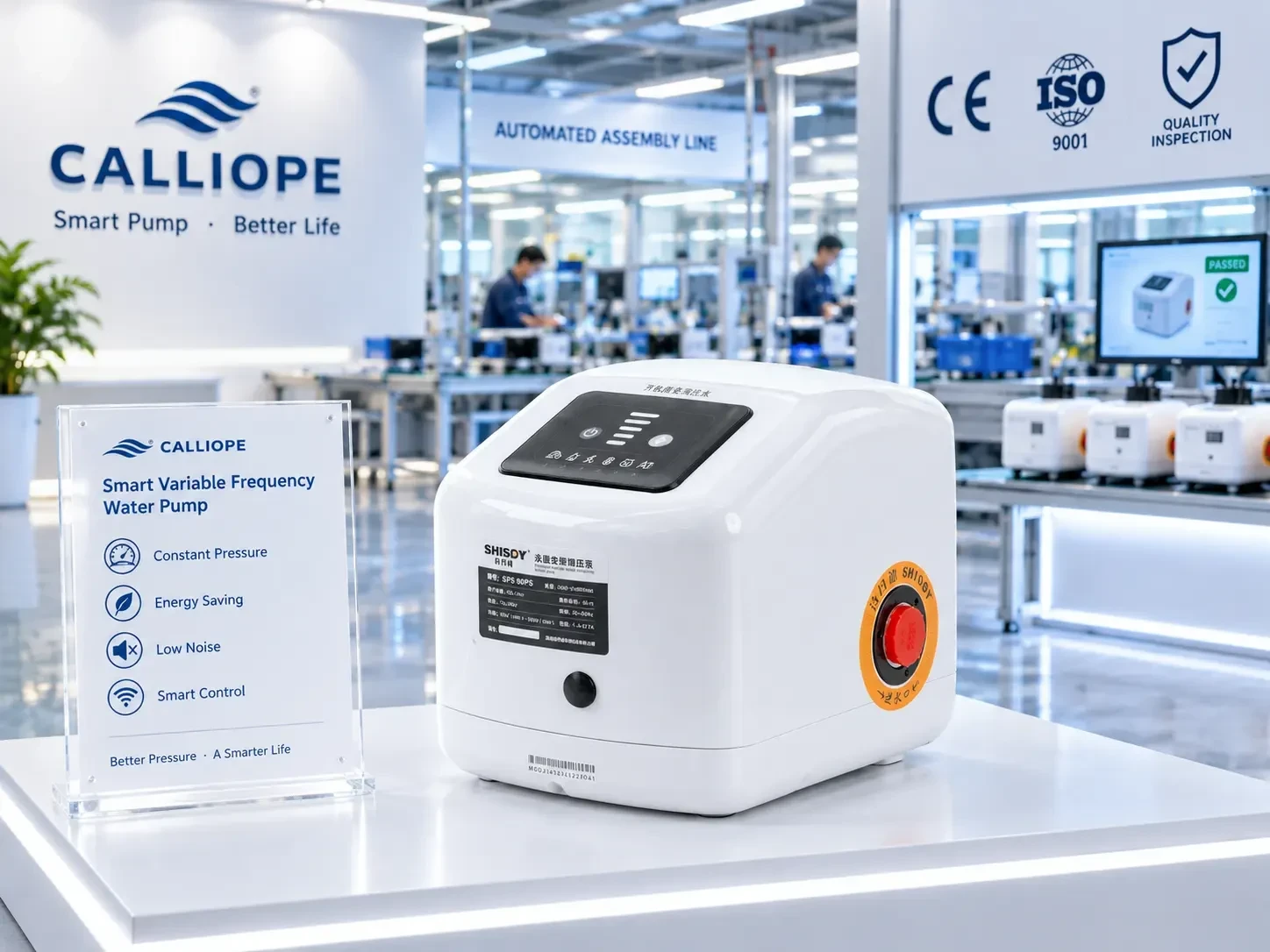
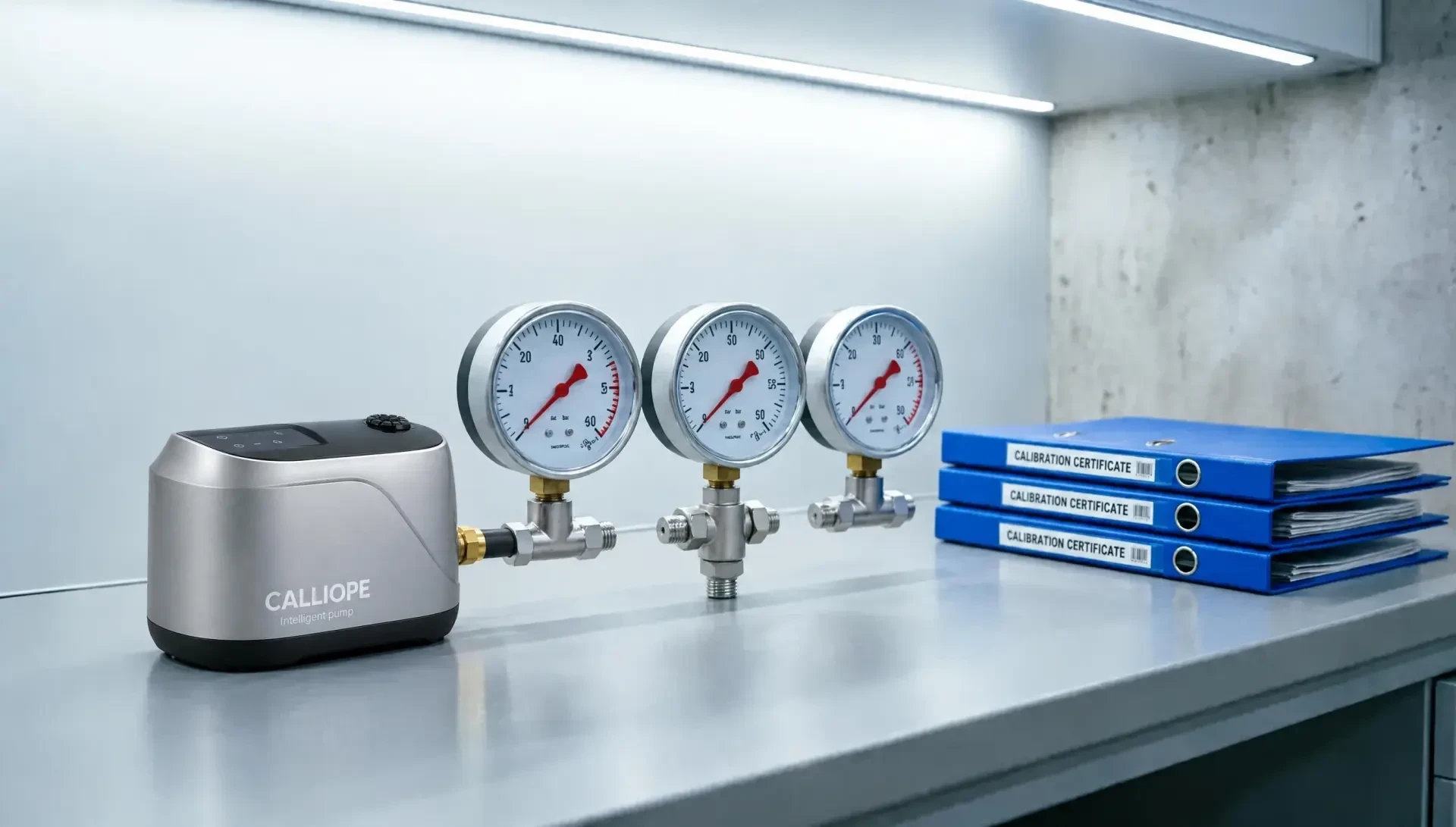
A PM VFD pump costs more to buy than a fixed-speed pump of the same output, because the motor carries permanent magnets and the drive is built into the pump. That difference is recovered in running cost rather than in the price tag: at part-load duty the pump draws less power for the same flow and head, and soft speed control removes the on/off cycling that wears out a fixed-speed set. Send us your duty point and we will put the two options side by side in writing.
A traditional pump runs at full speed all the time, which shows up as higher electricity bills, constant noise and motor burnout over the years.
Low cost pumps save money with standard bearings, low grade shafts and thin windings. The flagship SPS90 is built differently on purpose.
Old style pumps are heavily commoditised and competing on price alone leaves very little margin per unit.
One line per dimension, from pressure behaviour and rotor construction to running cost and after-sales load.
Motor Technology
Most booster pumps on the market still use a squirrel-cage induction motor running at a fixed speed. A permanent magnet rotor with an integrated variable frequency drive changes the way the pump is controlled: speed becomes the control variable, and efficiency no longer depends on running flat out.
The rotor carries its own magnetic field, so there is no rotor copper loss to generate. At part load the motor keeps a high share of its rated efficiency instead of running at full speed, so the pump draws only what the outlets need.
The integrated VFD reads line pressure continuously and trims motor speed to hold the set point. Restart is a soft ramp from low speed, and flow follows draw-off instead of switching the pump on and off.
Motor, drive and hydraulic end sit in one housing, so the pump fits a utility cabinet without a separate starter panel. Less rotor loss and no cooling fan at part load keep running noise low inside living space.
Dimension
PM VFD pump · conventional fixed-speed pump
Efficiency, power factor and starting figures are typical for fractional-kW single-phase booster pumps. Values for a specific model are listed in its technical data sheet.
Send us the flow, head, voltage and site conditions. We will reply with the recommended boosting level, power setting and documentation.
Cookies: essential storage keeps the site working. Analytics cookies are set only after you click Accept. If you decline, no analytics cookies are set. Cookie Notice